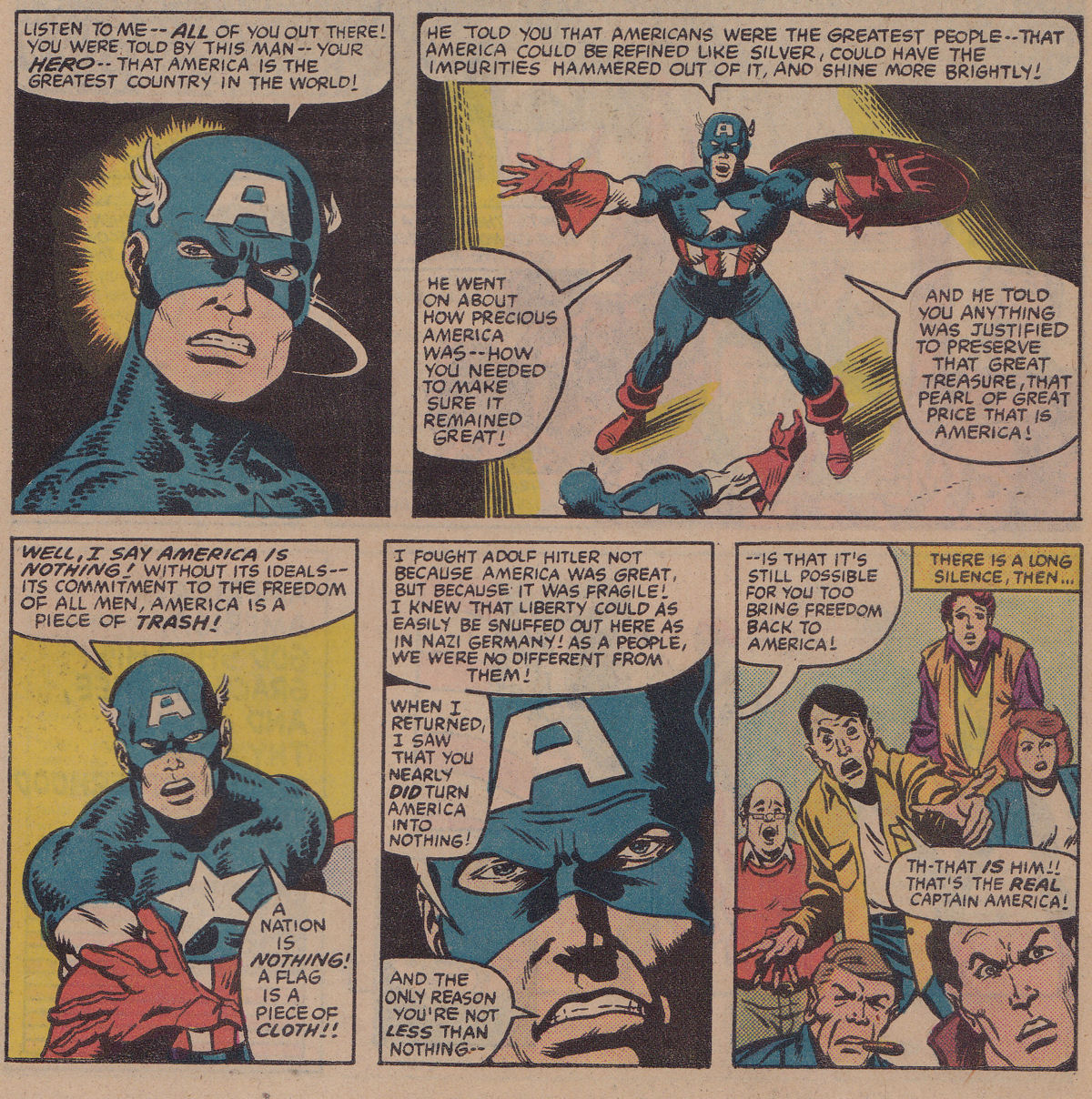
Superman never made any money for saving the world from Solomon Grundy

Showing posts with label plainclothes monk. Show all posts

Thursday, March 2, 2023

That was then...


So, I was looking for something else in some dusty computer files but ran across one of my old, ubiquitous spreadsheets (see unreadable facsimile above). It is a record of the social activities (both dates and group events) that Coco and I initiated in Fall/Winter of 2005.

Over the course of a little over four months, we had some sort of activity about every eight days with an average participation of 8 individuals (ranging from just the two of us to twenty people on New Year's Eve). A total of 31 friends and acquaintances are represented in these activities, most attending between one and three events and six people attending five or more.

I look at this from 17 years ago and compare it to my experiences even in the last decade or so and I can feel the drastic difference. A number of factors have contributed to that, of course; a minor diaspora of the old Seattle gang, mostly in response to housing pressures; our own move to Bellingham seven years ago; the general effects of aging and changing job circumstances on social activities; and, of course, for the past three years or so the disruption caused by the pandemic (which I believe is leading to continued patterns of behavior, but that's another essay). In any event, outside of work, I am not sure I have socialized with 30 different individuals in the past five years...

I don't have a spreadsheet with the stats (shocking) but I am sure the same decline is true in my tabletop RPG experience. I can remember playing every week in the campaign John was DMing, DMing my own campaign, and participating in a campaign at the game store on Cap Hill, all at the same time. Now I have one Zoom/Roll 20 game that I can attend three times a month.

So it goes.

I'm not sure how I feel about this. When I shared with Coco the details of the spreadsheet, she said "No wonder I was a wreck and you were so happy!" It is true that the pandemic slowdown -- less socializing, working from home, etc. -- has actually played to some preferences of introverts like her, but I wonder if it it isn't time to swing the pendulum back a little bit, maybe not all the way to our "posse days" but somewhere closer to the middle.


Sunday, April 17, 2022

New news


So, I was looking through my records and saw that since I first started working (too long ago to mention), about every 6.75 years (on average) I have taken a year or so off to do something besides work a job - go to school, travel, consult, or just be un- or under-employed. You can see the pattern of dips in my Social Security record of income, in fact.

That pattern held steady until I finished grad school in 2003, and for the 19 years working in higher education since then I haven't taken one of these unofficial sabbaticals, but merely moved from one increasingly responsible position to another. (My accidental tenure is whole other story.) Well, that long dry spell is over. I have, for Reasons, left my position at Bellingham Technical College and will be swept along in the wave that is being called the Great Resignation.

Being Interim President was great fun for a few minutes, but taking on that responsibility in the middle of a pandemic and steering a course through several major challenges has certainly been a burden, and laying it down does bring a great sense of relief and a lightening of my load. This decision will also allow me to focus more on some personal issues, a few of which of require immediate attention and others of which will result in some significant transitions down the road. I am considering this a semi-retirement; it's just a little bit ahead of the schedule that has been in my countdown timer for a few years (which might actually play in my favor) but I am open to exploring some low-key possibilities down the road.

In any case, I will be continuing my art cartooning practice, taking care of the house, supporting my hardworking grad student wife, and generally trying to remain a productive member of society and not lapse into total indolence. I have alway held that work was cutting too much into my free time; let's see what good use I can put it to.

I'll leave you with my final piece form 2D Composition and Design as it seems fitting.


Thursday, February 17, 2022

Drawn to it

So, some of you may recall that over a year ago, I was accepted to and began online studies at St. Francis Law School. Of course, some months later, the whole interim president thing started at work (it's still going), resulting in my changing plans and abandoning my nascent bar-exam-cram-school experience, at least temporarily.

Well, one thing that the past 14 months in the president's office has taught me is that when I retire, the last thing I want to do is any more expectation managing, issue negotiating, problem solving, conflict de-escalation, relationship building, or data-based decision-making. So law school is off the menu for good.

Besides, those attorneys are pikers - I'm going where the real moving and shaking happens: cartooning!


Of course, the W.L. Evans School of Cartooning (Cleveland, Ohio) is long gone from the mortal plane, but luckily, right up the road (and across the border) I found the next best thing: The Emily Carr University of  Art + Design.

All kidding assigned, I have enrolled in the ECUAD Continuing Studies program for a Certificate in Illustration. I have been taking art classes on and off for literally more than 40 years, and in what is perhaps the triumph of hope over experience, I am committing to this plan with the goal of establishing a strong skill base and a consistent practice that will allow me to slide gracefully into a new post-retirement job/business/career/avocation/something. I am taking two courses this semester - 2D Composition, which met for the first time last night, and Intro to Drawing (for like the third or fourth time), which starts in two weeks. These classes are taught in synchronous online sessions, but if and when the pandemic subsides, ECUAD is within striking distance for on-ground classes as well.

The class last night went pretty well - the instructor is groovy and it's really an eclectic and diverse group of students. The online format worked just as I had imagined, with folks holding up their sketchbooks to the camera on Zoom and so on. Our first assignment last night was to complete a grid experimenting with expressing different design concepts using different elements of art. 

Here's mine:


I'm not sure I quite understand formal at training; it's a far cry from the idiom with which I am most familiar and I often don't see a direct connection between my technical goals and the exercises. But it's time to chop wood and carry water: trust the teacher and immerse myself in the process.

We'll see if enlightenment of any sort is down the way.


Sunday, October 3, 2021

The river flows


So, this birthday is a big milestone, one would suppose, based on the Beatles song that identifies this age as a turning point, the beginning of some sort of uncertain phase of life. Of course, it actually has no operational significance; tomorrow will be much the same as yesterday in any practical sense.

As I was looking back through old posts for insight into how to characterize this moment, if was first led to Heraclitus, who is famously to have said that you can't step into the same river twice - that change is constant. Less famously, Heraclitus can said to have been topped (in the tradition of old stand-up comedians) by Cratylus, who added to that observation the idea that you cannot even step into the same river once. Here's how the Oxford Reference puts it:

[T]he river is changing and gone even as a single event of stepping occurs. The point is that reality is utterly particular (one individual event, one moment of time, one individual thing after another). Any adequate thought would have to match the flux with change of its own, so any attempt to categorize reality is like trying to cage the winds

Now, I am certainly not going to say that Cratylus is spot on, but it sure does feel that way these days. Between COVID and about a jillion unknowns at work, it certainly seems that every particular moment is its own universe, one which bears only coincidental resemblance to the instant that precedes or follows it. It is not without consequence that "pivot" has been the word of the year - whether it is a profound philosophical truth or not, it has been a workaday reality that change has been our only constant. Which just makes it harder to pick any one of these moments as a milestone or watershed.

But contra Hearaclitus and Cratylus, my rifling through old blogs demonstrated that there has been constancy of a sort over the years. My reliance on Epicurean philosophy, Stoicism, and Absurdism is a thread; so is my series of summer self-improvement programs (at least when I had summers). I was having a conversation with someone the other day that brought home to me how much lore and understanding of the field my 24 years in the community and technical college system have given me. And of course, my family unit of me, Coco, and Selkie is still going strong. Maybe Jean-Baptiste Karr had it right when he said plus ça change, plus c'est la même chose.

In any case, the river flows on. Last night in our hot tub soak, Coco suggested we visualize a lazy river float as part of our reflection/mediation time. The river of life hasn't been so lazy lately, but that doesn't mean the river of the soul can't be. 

I'll think I'll just float past this "utterly particular" not-milestone with that in mind.


Saturday, September 11, 2021

Twenty years

 A tragedy that has lasted much longer than a day. Well said here.

Thursday, November 26, 2020

It's Thursday


(No brand endorsement implied, I just really like the cleavering)

So, it's Thanksgiving, or as we call it in this house, Thursday off. Lots of reasons it is a problematic day: political, historical, dietary, and so forth - but I am not wanting to diatribe today.

As I have said before, it is a good thing, separate from any particular myth, to take a moment to be mindfully grateful for what we have. The annus horribilis that was 2020 doesn't seem at first glance to be fertile ground for reaping thanks, but really there's some good stuff in there.

Neither Coco nor I actually suffered directly from Covid-19, in the sense of becoming ill from coronavirus.

Both Coco and I kept our jobs, working remotely, and suffered no financial hits from the pandemic.

We have a home situation that includes two separate offices, so while we were working remotely those ten or so hours a day, we weren't on top of each other.

We live in an area where it is possible to take long walks in empty streets on on mostly empty trails, often with a view of the bay, helping to keep us grounded and sane.

We have ample access to technology that allowed us not only to work but to stay in touch with family and friends.

It would be unseemly to be less than grateful that we were able to weather this crisis relatively unscathed.

Similarly, the unpleasant political situation in which we find ourselves has not affected us directly. We are lucky enough not to be specific targets of the varieties of hate, both personal and institutional, that have manifest themselves in this country over the past few years.

Of course, what this creates is an even greater responsibility to do the right thing and support those who are less fortunate, materially and politically. I think we have done this - I hope we have done this. I know that the notion looms large in our conversations every day and is demonstrated in where we direct our time, energy, and resources.

And that is what I am most grateful for, in the end: the opportunity to do some good and help those who need it.

Let's all try that, okay?


Monday, January 20, 2020

Reminder

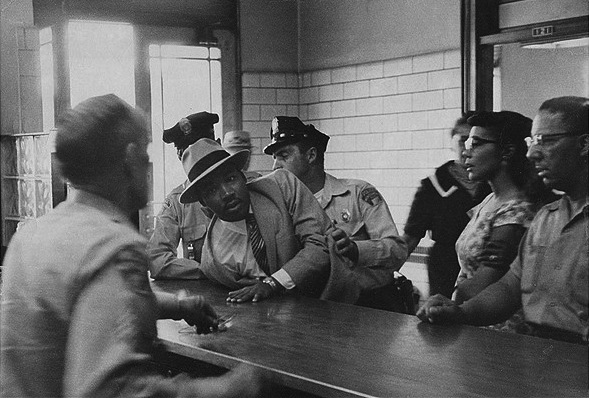
"We must recognize that we can’t solve our problem now until there is a radical redistribution of economic and political power… this means a revolution of values and other things. We must see now that the evils of racism, economic exploitation and militarism are all tied together… you can’t really get rid of one without getting rid of the others… the whole structure of American life must be changed. America is a hypocritical nation and [we] must put [our] own house in order.”
- Dr. Martin Luther King Jr., Report to SCLC Staff, May 1967.


Martin Luther King worked not only as a champion of racial justice, but also as an anti-war activist, a labor organizer, and an anti-capitalist. He was a target of the FBI, the CIA, and the NSA, and had a public disapproval rating of nearly 75% when he died. He envisioned a sweeping change to the American social and political fabric. As I look around today at the brazen rise of white supremacists, the perpetual war machine, the decline of unions, and economic inequities not seen since the the days of the robber barons, I have to wonder how much progress we have made in the past fifty years, and how much backsliding we have experienced. We need the courage to stand for a fundamental change in the way do things in America, regardless of how disruptive or unsettling that may feel. We can't wait another fifty years.

“Call it democracy, or call it democratic socialism, but there must be a better distribution of wealth within this country for all God’s children.”
 – Dr, Martin Luther King Jr., speech to the Negro American Labor Council, 1961.

Thursday, July 4, 2019

Fireworks day

So, July 4 is a bit problematic; I may have mentioned that before, here or there. This year, rather than once more bemoan the economic inequality and social injustice baked into our system, I'd like to remind us all of someone who said it so well, so long ago.

***

Let America Be America Again
Langston Hughes, 1935


Let America be America again.
Let it be the dream it used to be.
Let it be the pioneer on the plain
Seeking a home where he himself is free.

(America never was America to me.)

Let America be the dream the dreamers dreamed—
Let it be that great strong land of love
Where never kings connive nor tyrants scheme
That any man be crushed by one above.

(It never was America to me.)

O, let my land be a land where Liberty
Is crowned with no false patriotic wreath,
But opportunity is real, and life is free,
Equality is in the air we breathe.

(There’s never been equality for me,
Nor freedom in this “homeland of the free.”)

Say, who are you that mumbles in the dark?
And who are you that draws your veil across the stars?

I am the poor white, fooled and pushed apart,
I am the Negro bearing slavery’s scars.
I am the red man driven from the land,
I am the immigrant clutching the hope I seek—
And finding only the same old stupid plan
Of dog eat dog, of mighty crush the weak.

I am the young man, full of strength and hope,
Tangled in that ancient endless chain
Of profit, power, gain, of grab the land!
Of grab the gold! Of grab the ways of satisfying need!
Of work the men! Of take the pay!
Of owning everything for one’s own greed!

I am the farmer, bondsman to the soil.
I am the worker sold to the machine.
I am the Negro, servant to you all.
I am the people, humble, hungry, mean—
Hungry yet today despite the dream.
Beaten yet today—O, Pioneers!
I am the man who never got ahead,
The poorest worker bartered through the years.

Yet I’m the one who dreamt our basic dream
In the Old World while still a serf of kings,
Who dreamt a dream so strong, so brave, so true,
That even yet its mighty daring sings
In every brick and stone, in every furrow turned
That’s made America the land it has become.
O, I’m the man who sailed those early seas
In search of what I meant to be my home—
For I’m the one who left dark Ireland’s shore,
And Poland’s plain, and England’s grassy lea,
And torn from Black Africa’s strand I came
To build a “homeland of the free.”

The free?

Who said the free? Not me?
Surely not me? The millions on relief today?
The millions shot down when we strike?
The millions who have nothing for our pay?
For all the dreams we’ve dreamed
And all the songs we’ve sung
And all the hopes we’ve held
And all the flags we’ve hung,
The millions who have nothing for our pay—
Except the dream that’s almost dead today.

O, let America be America again—
The land that never has been yet—
And yet must be—the land where every man is free.
The land that’s mine—the poor man’s, Indian’s, Negro’s,
ME—
Who made America,
Whose sweat and blood, whose faith and pain,
Whose hand at the foundry, whose plow in the rain,
Must bring back our mighty dream again.

Sure, call me any ugly name you choose—
The steel of freedom does not stain.
From those who live like leeches on the people’s lives,
We must take back our land again,
America!

O, yes, I say it plain,
America never was America to me,
And yet I swear this oath—
America will be!

Out of the rack and ruin of our gangster death,
The rape and rot of graft, and stealth, and lies,
We, the people, must redeem
The land, the mines, the plants, the rivers.
The mountains and the endless plain—
All, all the stretch of these great green states—
And make America again!

***

Man, that gets me every time.

Just a couple more things.

One, a timely comment I found on Twitter regarding the Washington D.C. celebration today:


Ah, well.

And lastly:


E pluribus unum (/ˈiː ˈplɜːrɪbəs ˈuːnəm/; Classical Latin: [ˈeː ˈpluːrɪbʊs ˈuːnũː]) - Latin for "Out of many, one" (translated as "One out of many" or "One from many") - is a 13-letter traditional motto of the United States, appearing on the Great Seal [...] Never codified by law, E pluribus unum was considered a de facto motto of the United States until 1956 when the United States Congress passed an act (H. J. Resolution 396), adopting "In God We Trust" as the official motto.*     (from Wikipedia)

E pluribus unum is my notion of a motto, and The Original Motto Project is working on it. I haven't fully vetted the group yet, but I can sure approve in principle of their mission. By the way, the official motto of the European Union is In varietate concordia (United in diversity), so there you go.

If you have the day off, enjoy it. If you are using or enjoying fireworks, please be mindful of animals and folks with special sensitivities. If you're not in the USA, Happy Thursday.


*This was about the same time Superman started fighting for "truth, justice, and the American Way"
 instead of just for "truth and justice." How fragile we can be...


Monday, January 21, 2019

MLK


So, in the past on this January national holiday, I have posted a couple of times regarding the legacy of Dr. Martin Luther King, Jr.

This year, here's an article from Jacobin magazine that covers a lot of the same ground, but much more comprehensively.

https://www.jacobinmag.com/2017/01/restoring-king-2

Have a good day.

Tuesday, January 1, 2019

Excelsior.


So we begin another year, and the work continues. Some of us struggle to survive, some are lucky enough to have to grapple only with figuring out how to help.

The world can seem daunting. Consider the words of Albert Camus:

I leave Sisyphus at the foot of the mountain! One always finds one's burden again. But Sisyphus teaches the higher fidelity that negates the gods and raises rocks. He too concludes that all is well. This universe henceforth without a master seems to him neither sterile nor futile. Each atom of that stone, each mineral flake of that night filled
mountain, in itself forms a world. The struggle itself toward the heights is enough to fill a man's heart. One must imagine Sisyphus happy.
It is absurd, but so are we.

Wishing everyone the best in the coming year.


Wednesday, July 4, 2018

July 4

So, I am at a loss to express how I feel this Independence Day; here are some words and images kiped from here and there on the internet.


'nuff said. Let's get to work.

Tuesday, March 28, 2017

Auto adjust

So, the other day, the inside driver's door handle on my little Smart Car broke,. I was, of course, attempting to exit the car when the failure occurred. The flap-like lever that I pulled made a little "pop" and the cable it was pulling no longer seemed to have enough tension to trip the activator. My guess was that one of the braids of the cable had snapped and the cable itself had lengthened just a bit, but regardless of the diagnosis, there was no opening that door from the inside.


I could exit through the passenger door, but as small as the Smart is, that still required climbing over a stick shift and hand brake - not very smooth. The work-around was fairly simple: roll the window down and open the door using the outside handle, which still worked just fine. There were just two problems with this plan.

The first lay in the Smart's autolocking doors: as soon as the car reaches ten miles per hour, the doors lock, and the outside handle obviously won't work if the doors are locked. There is no unlock mechanism on the door or on the dash - the only way to unlock the door (besides the inside handle) is the button on the clicker. But the button on the clicker won't work if ignition is on. But the windows are electric and can't be operated if the ignition is off. So the routine had to go something like this: stop, roll window down, turn ignition off, unlock door, reach through window and open door, turn ignition on, roll window up, turn ignition off again.

The second problem was more physical: the Smart car's geometry puts the exterior door handle behind the driver and about even with my ears, calling for a maneuver with a relatively high degree of difficulty. Try reaching behind you at head height and imagine doing it through a window to pull something laterally and you'll feel what I mean.

All this to say that I took the car in posthaste to get fixed: I didn't want to out up with this rigmarole any longer than I had to. I took the car in on a Thursday; because they had to order a part it stayed at the shop over the weekend until Monday, and it was going to coast me about $500. Pretty steep ticket for a snapped cable, but I need to get in and out of the car, right? I went back to a bus commute for a few days, no problem, and a buddy dropped me off at the shop Monday.

There was a fellow ahead of me getting an estimate on having his wheel bearings re-packed.  They were making noise so he was worried about taking the car any distance, and he needed to make a trip to Portland sometime soon. After some calculating, the price came back: about $500. The fellow hesitated a little, and then decided that he wouldn't leave the car just then, but would have to wait until next week, because the $500 was more than he could spare, and he'd have to wait until after he got paid again before he had enough to do the work. He drove off with his noisy, dubious brakes.

This was a moment that made me realize how good I have it. I had not hesitated to get my car door fixed and the repair was just to correct an inconvenience, not to ensure safety. The bill was an annoyance,  but not a deal-breaker: my daily routine would not be affected, I would not miss a meal, I would actually feel no effect except perhaps a deferred luxury or a little less in savings at the end of the year. I was reminded that I no longer live paycheck-to-paycheck and what a great privilege that is: it has not been all that long that I have been in that situation and I know plenty of people for whom it is still out of reach.

Moments like this preserve, I hope, my compassion and generosity of spirit. I can't spend money that doesn't hurt without remembering all my brothers and sisters who have less, or who have no money to spend at all. I find ways to give back, big and small, planned and unplanned; if I didn't, I'm not sure how I could go on.

I had been down in Seattle the previous week at a training sponsored by a business association for area professionals (and some academics like me). The day-long session ended with a "heavy hors d'oeuvre" reception in the hotel bar:  sliders, quiches, shoestring potatoes, fried cheese balls, the works. I couldn't stay long, and when I left I passed a homeless woman on the street outside the hotel. The contrast between the money being thrown away five stories above on people who didn't need it and this real person's immediate unmet needs was palpable. I was part of both those worlds. How could I not spare a couple of bills?

I'm not rich, and I like what I have, but I think I want to always remember how lucky I am, and to always remember those who are a little less lucky.

Monday, January 18, 2016

Recognizing

This is what Martin Luther King, Jr. said in May, 1967, in an address to the Southern Christian Leadership Conference:
We must recognize that we can’t solve our problem now until there is a radical redistribution of economic and political power… this means a revolution of values and other things. We must see now that the evils of racism, economic exploitation and militarism are all tied together… you can’t really get rid of one without getting rid of the others… the whole structure of American life must be changed. America is a hypocritical nation and [we] must put [our] own house in order.”
While politicians seem to like to invoke Dr. King's name,  I have heard only one presidential candidate talking about an approach to change that is anything close to this. The memory of MLK has been watered down and his power neutered as his narrative has been co-opted. He believed in the power of love, yes; he was also a radical who believed that radical change - political, economic, and social change- was necessary for justice to prevail in America.  He fought the Establishment and spoke truth to power: he stood up against racial injustice, he stood shoulder-to-shoulder with the working class, he demonstrated against the war. His fight was real and it goes on today.

Let's not forget that.


Thursday, November 26, 2015

Thanks

There's a lot wrong with the mythology of Thanksgiving, which arose from a particularly distorted view of our history, and we should recognize that.

There is a benefit, separate from any specific stories, to taking a moment to be grateful for all that we have.

Valuing the people that we know, the comforts that we enjoy, and even the things that we have will hopefully encourage us to realize what is truly valuable.

Taking time from our labors to come together and celebrate and share is good, and let us also be mindful of those who have been less fortunate than we have.

So, on this day I am humbly thankful for the material privilege I enjoy, the friends that I have found, and the love that I have shared.

And just so this doesn't become a too much of a sunrise sermonette, I am also grateful to live in a world where Wonder Woman rides a giant kangaroo.


Happy Thanksgiving, everyone.

Monday, June 8, 2015

Nostalgie de l'été

So, Seattle is apparently experiencing its new normal: we've had sunny days and temperatures near or above eighty for a couple of weeks now - and it's not even official summer, much less Seattle's traditional start of summer, July 5. All this glorious weather means sandals and t-shirts at work and corn on the cob and watermelon on the patio, hot sidewalks and vigorous gardens, and that distinctive aroma of water evaporating from concrete that evokes summer like nothing else for a city boy like me.

As I have walked around my neighborhood this warm spring, that smell, and the feel of the heat in the air and the sweat under my hat, have spurred a very particular memory of a summer long ago and on the other end of the country, back when I was a kid in Brooklyn.

New York City summers are a type of monster all their own. While we know that "90 degrees and 90% humidity" is pretty much a myth (at least as far as North America is concerned), New York summers can get awful - hot, humid, sticky, and, when I was a kid in the sixties, stinky with smog. (I guess it's gotten a bit better in that respect, anyway). Of all the things about New York that I might have missed since heading west 37 years ago, summer has not made the list.

And yet I find myself thinking about one particular summer day every time the temperature rises. I guess I was 11 or 12, and my sister Norma Jean 13 or 14. We were babysitting our nephew Daniel, my other sister Linda's son, and he could not have been much more than one, certainly not more than two yet. I'm not sure why we were minding him: our mother was the usual caregiver when one was needed. But this time, it fell to me and my sister - or more likely to my sister, and I was just along for the ride.

We packed up Daniel in his baby carriage - I would call it a stroller but that would evoke the streamlined nylon and magnesium frame apparatus of today, not the massive, chromed contraption that we struggled with. Besides the baby, we piled it high with toys and baby food in little jars and our lunches packed in empty margarine tubs and new-fangled plastic baggies and a couple of cans of cheap soda that had been stored in the freezer so they would still be nice and cold when it came time to drink them.

We journeyed down to a park - I'm not sure which one, but I would guess McKinley Park. My sister lived on 65th Street and 15th Avenue in Bensonhurst, not far from Regina Pacis Church, and when I checked Google maps to refresh my decades-old memory for this post, this seems like the likely place; it's about a mile and half from the apartment my sister lived in then, and that feels about right.

(I also discovered that the block-wide empty concrete schoolyard where my brother-in-law Gene (Daniel's father) used to throw a spaldeen so far to exercise their crazy Irish Setter Brandy now has basketball courts and a playfield and huge inlay map of the U.S., but that's a different rumination.)

We must have spent most of that sunny summer morning and afternoon in the park - playing, and letting Daniel play, or nap, or whatever it is little kids do when you take them to a park. Norma Jean must have fed him - and probably ate some of the baby food herself, as that was a predilection of hers for a while that carried on to when she cared for her own child. We ate our baloney sandwiches and Wise potato chips and whatever else we had and drank our sodas and then played some more. And then, hot and sweaty and exhausted and out of provisions, it was time to head back.

The slog back to my sister's apartment was interminable. It may have only taken a half-hour or so, but my recollection is that it took forever and a half. The distance is nothing now - I walk a mile to the  stop just to catch the bus to head to campus - but for two kids pushing an infant in a pre-war baby-buggy along the sidewalk and up and down curbs, it seemed like an overland trek. We were hot and tired and thirsty. Being kids, we were also penniless: there was going to be no stopping in at a deli or candy store along the way to buy a bottle of soda or a Yoo-hoo. There was no choice but stumble on, like Bruce Bennett in Sahara after his half-track breaks down.

I think I first noticed the smell: that distinctive aroma of water evaporating from concrete. Then  I saw it: our salvation, a fire hydrant that was leaking. From that black and silver pillar, that appliance of wonder, ran a small but steady stream of water, forming a small puddle in the cracked sidewalk and a little stream running down the gutter, pushing in its current small bits of light, dry litter. I took one of the empty margarine tubs and held it under the stream; slowly, too slowly, it filled with clear, cold municipal water. I would like to think I gave it to Norma Jean to drink first, but whether that is fact or over-ethical memory, I soon enough had my own share.

It was the best drink I had ever tasted in my short life till then, and few things have tasted so good since.

We stayed at the hydrant for a few minutes, drinking and refilling our makeshift cups, sprinkling some water on sleeping Daniel. We were both as sure as only the moral certainty of youth can grant that had we not found this wellspring, we would have died before ever reaching Linda's apartment. Such a horror had barely been averted; but the day was saved. Refreshed, we completed our transit.

So, the beginning of summer for me is not merely the prelude to picnics and bike rides, swimming and barbecues, trips to the beach and badminton in the park. Every ray of sunshine glinting off my sunglasses, every degree of Fahrenheit over 80, every heat wave radiating from the bright gray sidewalk - each of these is a reminder of how simple our needs really are and how sweet it can be to fill them simply.

As with a drink of cold water.

Friday, February 13, 2015

Anti-liminality


So, I encountered a colleague (and friend) in the hallway on campus the other day, and we stopped to chat since we hadn't seen each other in some time. She asked me how things were going, and I began to explain the development - or rather non-development - of the latest potentiality that I had been exploring, and in the middle of explaining the pros and the cons of the different outcomes and the possible next steps and all the considerations appertaining thereto, I suddenly interrupted myself by saying

You know, I'm pretty fucking tired of all this navel-gazing

and just like that it was like a fog cleared or dawn broke or a weight was lifted from my shoulders.

Call it realization, rationalization, exhaustion, or wisdom, I somehow understood all at once that all my schemes and plans and anticipation had been keeping me from living in the moment and enjoying my life as much as I could have been. It was not with acrimony that I came into this epiphany; the projects and prospects and goals that I had been pursuing were neither trivial nor without purpose.  It was not any specific action that was objectionable. The process had just been seemingly constant: certainly continual if not continuous, and clearly having gone on too long. I realized that in all the expectation of moving on, I hadn't been moving at all.

This insight was like a gift of afflatus from the gods. I had no ongoing projects: nothing brewing, nothing pending, nothing in the pipeline. Once relieved of the yoke of what might be I was able to savor and relish what is. And you know what is? This is what is.
  • I have a beautiful, smart, funny, unceasingly supportive wife to spend my days with.
  • I have a wonderful circle of friends who enlighten, uplift, and amuse me to no end.
  • I have possibly the best job in the world and am thoroughly enjoying my classes, my curricular work, and my students. 
  • I live in a totally cool neighborhood that is outstandingly walkable and has just about everything I need within striking distance.
  • I am physically, financially, and mentally sound.
I have an embarrassment of riches and a cornucopia of goodness; a treasure trove of amity and philia and pleasure is mine for the taking.

Two quotes from Epicurus are milestones to this renewed awareness:
 “Do not spoil what you have by desiring what you have not; remember that what you now have was once among the things you only hoped for.”

 “Not what we have but what we enjoy, constitutes our abundance."
If ever there was a time to be living it up, this is it. So that's what I'm gonna do. Care to join me?


Tuesday, December 23, 2014

Up and Atom

So, anyone who's known me very long (or has read the title of this blog) knows that I have more than a passing interest in Epicureanism - not sensual hedonism, in the modern (and incorrect) usage of the word, but the philosophy, related to Stoicism, named for Epicurus of Samos. In this school of thought, the avoidance of pain and the search for pleasure are related directly to the question of good and evil, and the ultimate goal is ataraxia, that state of clear-headed tranquility that comes from, among other things, releasing all fear of gods and the afterlife.

In addition to developing his ethical philosophy, Epicurus (pronounced eh-PIH-kur-us, btw) was a proponent of the atomist theory of matter - that everything material was comprised of combinations of tiny particles in different arrangements. Not a bad guess for someone in the fourth century BCE, eh?

The most definitive text on Epicureanism is De Rerum Natura - On the Nature of Things - by Titus Lucretius Carus, a Roman writing 200 years after the Greek philosopher's death. This poem by Lucretius, comprehensive in its elucidation and by all accounts beautiful in its language, could be considered the manual for modern, humanistic thinking. Yet it was lost for many years during the Middle Ages, the few extant copies mouldering in monasteries tucked into forsaken corners of Europe.

In The Swerve: How the World Became Modern, Harvard professor Stephen Greenblatt tells the story of one Poggio Braccioloni, a Vatican secretary and avid book-hunter who found and circulated Lucretius's classic work and in so doing became (according to Greenblatt) the spark of the renaissance and the catalyst for the modern world.

(airplane photo, complete with superhero bookmark)

Greenblatt weaves a tight story, equal parts history lesson, travelogue, political thriller, and comedy of manners. Throughout it all run two threads. One is the tension that Poggio embodied - a secular staffer in the Hoy See, a man obsessed with classical literature working in a culture that renounced all things pagan,  a person of intellectual curiosity living in a time of Inquisition. The other ever-present thread is the notion of just how close western civilization came to losing some of the pearls of its past - and how many gems were never found again. The swerve of the book's title refers the small deviation in the movement of one atom that causes a collision and begins the building of things, just as one small find by one lowly scholar began a whole new era.

The book is worth a read just for the sweep and scope of the adventure that brought that De Rerum Natura back to us. In addition, after the climax of the historical story, Greenblatt gives an excellent summary of the principles of Epicureanism as explained by Lucretius. I resonated so strongly with them, I reproduce the list here, minus the explanatory notes:
  • Everything is made of invisible particles
  • The elementary particles of matter are eternal
  • The elementary particles are infinite in number but limited in shape and size
  • All particles are in motion in an infinite void
  • The universe has no creator or designer
  • Everything comes into being as result of a swerve
  • The swerve is the source of free will
  • Nature ceaselessly experiments
  • The universe was not created for or about humans
  • Humans are not unique
  • Human society began not in a Golden Age of tranquility and plenty, but in a primitive battle for survival
  • The soul dies
  • There is no afterlife
  • Death is nothing to us
  • All organized religions are superstitious delusions
  • Religions are invariably cruel
  • There are no angels, demons, or ghosts
  • The highest goal of human life is the enhancement of pleasure and the reduction of pain
  • The greatest obstacle to pleasure is not pain; it is delusion
  • Understanding the nature of things generates deep wonder

I have to say, looking this over, that this is a pretty good summary of how I believe as I move through life. I have been reading and re-reading Epicurus and Lucretius for maybe forty years now; I guess some of it must have sunk in.

Read Lucretius, or at least read Greenblatt. You'll be glad you did either.

Wednesday, September 10, 2014

Excellent book by community college instructor

So, one part of WARMER that has been going well despite overall trends is the summer reading program, and the latest book in the series was The Deepest Human Life, a philosophy primer by Scott Samuelson, a community college philosophy instructor in Iowa City. Here's the TLDR: if you want an overarching understanding of what it means to do philosophy and are only going to read one book, this might well be the one to read.


I don't know if I have ever told the true story of how I got my first job teaching in a community college. The philosophy chair of local school had posted on Craig's List looking for a last-minute replacement instructor for an evening section of Philosophy 101 and had specified that the course text would be Samuel Enoch Stumpf's Philosophy: History and Problems. With no teaching experience and a master's degree in English, not philosophy, I responded with a note that began by describing how I had three grab-in-a-fire books in a rack on my bookshelf: a complete Shakespeare, Aristotle's Rhetoric, and a second-edition Stumpf that I had owned since the late seventies. I went on to explain how the book had been my go-to philosophy reference for twenty years and how I dipped into it on a regular basis just to keep myself somewhat immersed in philosophical thought. None of that was a lie, and it got me the job, or at least the interview that led to the job.

This book is a strong contender to replace that one, or at least to supplement it.

Stumpf, as the title indicates, comprised two sections: History, a chronological overview and summary (Ancient, Medieval, Modern, and Contemporary) and Problems, a selection of primary sources from all periods addressing the topics of Ethics, Religion, Politics, and Epistemology & Metaphysics.

Samuelson collapses this model. After a lyrical prelude, he investigates four questions: What is Philosophy, What is Happiness, Is Knowledge of God Possible, and What is the Nature of Good and Evil? Each section has an interlude, a vignette usually drawn from Samuelson's experiences at Kirkwood Community College, and the book closes with an overarching conclusion.

This structure allows Samuelson to move somewhat chronologically through the history of philosophy -- we do begin with Socrates and end with Hans Jonas -- but because our inquiry is based from the beginning around topics, the flow of the discourse is much more like a conversation than a lecture and the tone much more like a memoir than a textbook. Samuelson successfully blends precise, specific philosophical discussion with everyday language, analogies, and examples in precisely the way San Kean did less deftly with his explanations of DNA in The Violinist's ThumbThe Deepest Human Life is a joy to read on every page.

The difference in structure and the difference in timbre speak to a difference in intent: while Stumpf is clearly and unapologetically a reference work about philosophy, Samuelson has given us a personal perspective on doing philosophy. While a close reading of The Deepest Human Life will let you come away with a broad contextual understanding of the development of western thought, the book is really about inspiring the reader to think - and act, and live - more philosophically.

I think in some ways the book might be an attempt to replicate the experiences that Samuelson and some of his students have had in his community college classes: he describes how the introductory study of philosophy occasionally leads some students - or Samuelson himself - to profound insights, critical understanding, or new ways of dealing with life-and-death situations, important decisions, or just daily living.

While reading sections like "The Exquisite Materialism of Epicurus" and "The Mysterious Freedom of the Stoics" was like visiting old friends, of especial interest to me was the extended consideration of Abu Hamid al-Ghazali. "The Ecstasy without a Name," Samuelson's discussion of the 11th century Iranian philosopher's journey from skeptic to Sufi, was a fascinating inquiry into the nature of the spiritual and mystic experiences, topics that are less in my daily ken than others. This section is perhaps paradigmatic of Samuelson's approach: while Stumpf presents religion as a topic for consideration, Samuelson addresses the question from a very quotidian standpoint: every day, each of us chooses to believe in god or not; how can we do that with any confidence at all?

If you wish you could have a conversation with a friendly, supportive, smart friend about all the Big Questions you want to consider, you should consider reading The Deepest Human Life. It will be worth it.

Did I mention that Samuelson is a community college instructor?

Monday, June 23, 2014

Taking the temperature: 1

So, every once in a while, you come up with a plan, and it feels like a good plan, and you initiate the plan, and then something happens that makes you question not the details of the plan, but the philosophical underpinnings of the plan itself. We may have found ourselves there.

Last week, we launched WARMER, this year's Summer Self-Improvement Scheme™. The tally sheet in the right sidebar shows that the first week went pretty well: Writing, Art, Reading, Music, Exercise, and Roadwork all show strong participation and consistency. Lots of green boxes - yay!

Then this happened:


A friend connected me to this - Amanda Fuckin' Palmer throwing a great big pile of Chaotic Neutral all over my nice, neat Lawful Good spreadsheet.

And thus it has always been, the tension between order and chaos, Apollonian and Dionysian, the Gnome Monk and Dwarf Bard. I once took one of those diagnostic tests that determine how your personality characteristics match with broad career areas; the counselor didn't know how to advise me because my two highest scores were on the opposed tracks of Artistic and Clerical. Epicurus and the Ataraxia covering Wild Thing as a single.

I guess we could get all Aristotelian and run to the shelter of the Golden Mean, but that seems somehow non-committal, hedging the philosophical bet, as it were. The middle of the road just seems like the easiest place to get run over; a compromise between the Free Spirit and the Disciplined Soul doesn't seem like a Good Thing, but rather a weak thing from any direction. Choose your path. Decide. Commit to it, go forth, and embody it.

But which?

This dichotomy extends from my inner life to the practical sphere as well. The way I choose affects not just whether or how I structure my summer activities, but where I place myself in my life's work: as part of the order of the organization, even as an agent of change (administration) or on the edges with a little more freedom (faculty) and a little more opportunity to resist.

The monk and the bard.

I will leave myself with one line from the Anthem:

Quit the bitchin' on your blog
and stop pretending art is hard.

Peace out.

Tuesday, March 11, 2014

Dragged, dropped, and done

So, I am playing around with iMovie* the other night and my Mac is running slow. Then it starts telling me that I'm running out of room. I check my hard drive and sure enough, there's less than one GB of space left on that used-to-feel-so-big 60 GB drive. Time to fiddle around a bit.

So, fiddle I do, to include copying some stuff to thumb drives. I find a nice 2 GB folder of gaming pdfs (it would be a whole library of books, I guess) and drag them onto a half-filled 8 GB Data Traveler. The transfer takes a couple of minutes; I check that it has been successful, drag the now-transferred folder to the trash, empty the trash, and check the drive again. Some memory has opened up, but it looks like the folder is still there. I check a few files, and confirm that indeed it is. Confused, I go back to the source folder. It only takes a glance to see what has happened.

I have deleted the wrong files.

You see, I had two sub-folders in "Gaming" folder. One was called RPG Source Material; that was the one I moved on to the thumb drive. The other was called RPG Desktop; that was the one I actually deleted. (Serves me right for naming them so similarly. I was always opening the wrong one when I was looking for a file; I should have known.)

Anyway, as Wonder Wife came into the room, I realized what I had done. There was no way back, no un-do, no return trip: this was "no backsies" as we used to say when trading baseball cards or bottle caps. Three or four years of my slightly OCB record-keeping of the roleplaying games I had participated in (or planned) was gone: the character sheets, maps, backstory narratives, illustrations kiped from here and there - all manner of gaming flotsam, painstakingly filed and labeled and stored - all of it vanished with one click of the mouse.

My reaction: meh.

Seriously, you can ask Wonder Wife: there were no screams of anguish, no shouted curses and obscenities, no wailing and gashing of teeth and rending of garments.  I mean, I was disappointed, of course; I have a penchant for almanacking and gazetteering and taxonomizing, and besides the archival material, there were some files in there that would have been useful in planning new campaigns. But seriously? C'mon. It was hobby junk.

No one was going to die, or lose their job, or go to jail over this. No one was going to be denied human companionship or be forced into servitude or be driven from their homeland. No one would miss a meal.

I have seen pictures of people standing in front of what used to be a home before a hurricane or tornado or earthquake had had a go at at. Everything a person owned had been reduced to flinders and rags, valueless, useless broken bits and bobs of a life, and been strewn across the landscape. It would be hard to deny that that was a real loss, but still, in the end, it was just stuff. Life goes on, and people do too, with or without the Things that We Used to Have.

Me? I had lost some files. Ephemera, really. Hemingway's wife lost a whole suitcase full of his drafts and look what happened to him.

Thirty seconds after the incident, I was back in iMovie, working away. Three or four years from now, a newly-renamed file will once again be bulging with schemes and plans and drawings and maps and characters and ideas.

Maybe I'll delete it on purpose then.


*For what I was playing with, tune in to He is a Thark tomorrow!